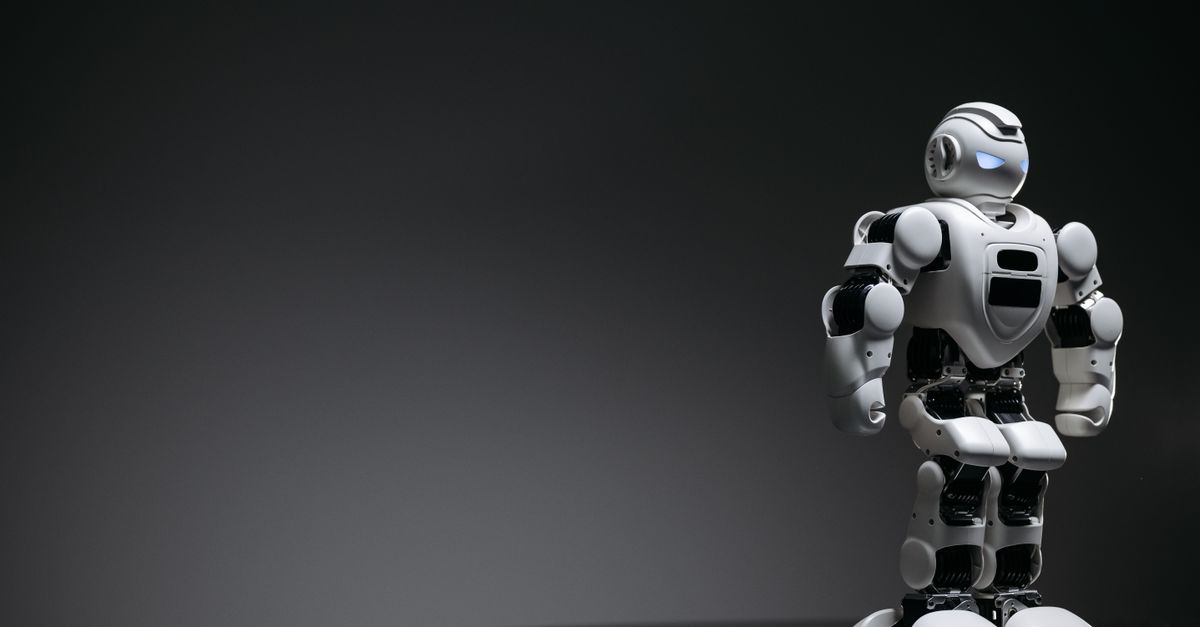

Vision-language-action models, commonly referred to as VLA models, are artificial intelligence frameworks that merge three fundamental abilities: visual interpretation, comprehension of natural language, and execution of physical actions. In contrast to conventional robotic controllers driven by fixed rules or limited sensory data, VLA models process visual inputs, grasp spoken or written instructions, and determine actions on the fly. This threefold synergy enables robots to function within dynamic, human-oriented settings where unpredictability and variation are constant.
At a broad perspective, these models link visual inputs from cameras to higher-level understanding and corresponding motor actions, enabling a robot to look at a messy table, interpret a spoken command like pick up the red mug next to the laptop, and carry out the task even if it has never seen that specific arrangement before.
Why Conventional Robotic Systems Often Underperform
Conventional robots perform remarkably well in tightly controlled settings such as factories, where lighting, object placement, and daily tasks remain largely consistent, yet they falter in environments like homes, hospitals, warehouses, and public areas. Their shortcomings often arise from compartmentalized subsystems: vision components tasked with spotting objects, language modules that interpret instructions, and control units that direct actuators, all operating with only a limited shared grasp of the surroundings.
This fragmentation leads to several problems:
- Significant engineering expenses required to account for every conceivable scenario.
- Weak transfer when encountering unfamiliar objects or spatial arrangements.
- Reduced capacity to grasp unclear or partially specified instructions.
- Unstable performance whenever the surroundings shift.
VLA models resolve these challenges by acquiring shared representations across perception, language, and action, allowing robots to adjust dynamically instead of depending on inflexible scripts.
How Visual Perception Shapes Our Sense of Reality
Vision provides robots with situational awareness. Modern VLA models use large-scale visual encoders trained on billions of images and videos. This allows robots to recognize objects, estimate spatial relationships, and understand scenes at a semantic level.
A hospital service robot, for instance, can visually tell medical devices, patients, and staff uniforms apart, and rather than just spotting outlines, it interprets the scene: which objects can be moved, which zones are off‑limits, and which elements matter for the task at hand, an understanding of visual reality that underpins safe and efficient performance.
Language as a Versatile Interface
Language transforms how humans interact with robots. Rather than relying on specialized programming or control panels, people can use natural instructions. VLA models link words and phrases directly to visual concepts and motor behaviors.
This provides multiple benefits:
- Non-expert users can instruct robots without training.
- Commands can be abstract, high-level, or conditional.
- Robots can ask clarifying questions when instructions are ambiguous.
For instance, in a warehouse setting, a supervisor can say, reorganize the shelves so heavy items are on the bottom. The robot interprets this goal, visually assesses shelf contents, and plans a sequence of actions without explicit step-by-step guidance.
Action: Moving from Insight to Implementation
The action component is where intelligence becomes tangible. VLA models map perceived states and linguistic goals to motor commands such as grasping, navigating, or manipulating tools. Importantly, actions are not precomputed; they are continuously updated based on visual feedback.
This feedback loop allows robots to recover from errors. If an object slips during a grasp, the robot can adjust its grip. If an obstacle appears, it can reroute. Studies in robotics research have shown that robots using integrated perception-action models can improve task success rates by over 30 percent compared to modular pipelines in unstructured environments.
Insights Gained from Extensive Multimodal Data Sets
One reason VLA models are advancing rapidly is access to large, diverse datasets that combine images, videos, text, and demonstrations. Robots can learn from:
- Video recordings documenting human-performed demonstrations.
- Virtual environments featuring extensive permutations of tasks.
- Aligned visual inputs and written descriptions detailing each action.
This data-centric method enables advanced robots to extend their competencies. A robot instructed to open doors within a simulated setting can apply that expertise to a wide range of real-world door designs, even when handle styles or nearby elements differ greatly.
Real-World Use Cases Emerging Today
VLA models are already influencing real-world applications, as robots in logistics now use them to manage mixed-item picking by recognizing products through their visual features and textual labels, while domestic robotics prototypes can respond to spoken instructions for household tasks, cleaning designated spots or retrieving items for elderly users.
In industrial inspection, mobile robots apply vision systems to spot irregularities, rely on language understanding to clarify inspection objectives, and carry out precise movements to align sensors correctly, while early implementations indicate that manual inspection efforts can drop by as much as 40 percent, revealing clear economic benefits.
Safety, Adaptability, and Human Alignment
Another critical advantage of vision-language-action models is improved safety and alignment with human intent. Because robots understand both what they see and what humans mean, they are less likely to perform harmful or unintended actions.
For example, if a human says do not touch that while pointing to an object, the robot can associate the visual reference with the linguistic constraint and modify its behavior. This kind of grounded understanding is essential for robots operating alongside people in shared spaces.
How VLA Models Lay the Groundwork for the Robotics of Tomorrow
Next-gen robots are expected to be adaptable helpers rather than specialized machines. Vision-language-action models provide the cognitive foundation for this shift. They allow robots to learn continuously, communicate naturally, and act robustly in the physical world.
The importance of these models extends far beyond raw technical metrics, as they are redefining the way humans work alongside machines, reducing obstacles to adoption and broadening the spectrum of tasks robots are able to handle. As perception, language, and action become more tightly integrated, robots are steadily approaching the role of general-purpose collaborators capable of interpreting our surroundings, our speech, and our intentions within a unified, coherent form of intelligence.