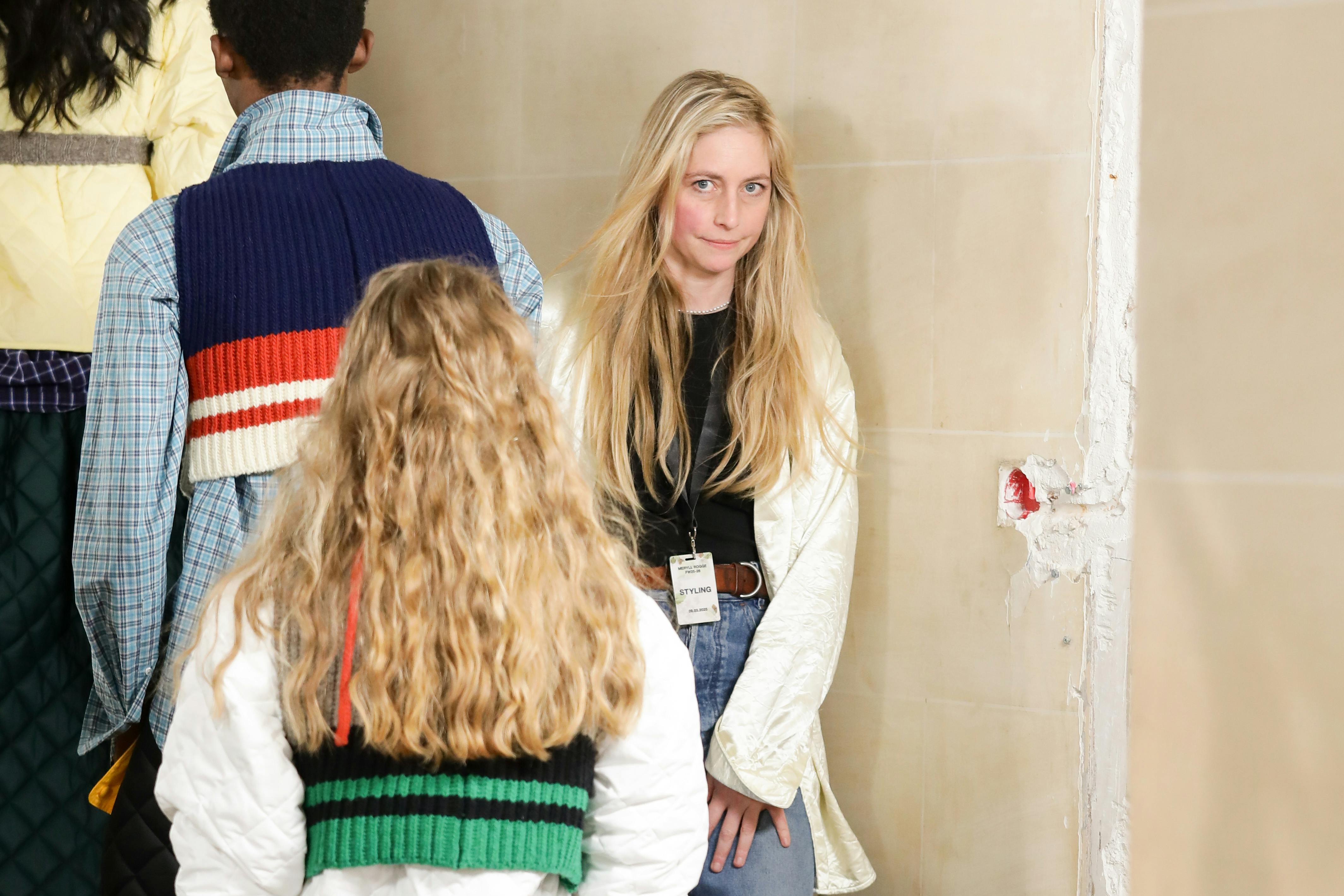

Meryll Rogge’s selection as the fresh creative director of Marni signifies an important phase in the growth of the Italian fashion brand. Renowned for its diverse designs, vibrant hues, and innovative textures, Marni has consistently celebrated individuality. Now, with Rogge leading creatively, the brand embarks on a new period—characterized by her distinctive outlook, vast industry expertise, and robust design intuition.
Rogge is not an outsider to the fashion elite. Her professional journey includes collaborations with some of the most esteemed figures in the field, and she is known for blending forward-thinking ideas with practical clothing. Hailing from Belgium and an alumna of the prestigious Royal Academy of Fine Arts in Antwerp, Rogge came from one of Europe’s leading design institutions—a hub for innovative minds and creators who challenge conventional norms. This foundation has influenced her conceptual approach to fashion, harmonizing artistic flair with practicality and design.
Before joining Marni, Rogge enhanced her experience through significant roles at renowned brands. She was involved with Dries Van Noten, where she mastered the use of color, creative layering, and textile experimentation, enhancing the brand’s unique look. She subsequently moved to Marc Jacobs in New York, where she broadened her international design outlook and honed her skill in linking creative ideas with business. These roles across both European and American fashion domains equipped her to handle the diverse challenges of leading a brand as diverse as Marni.
Her own eponymous label, launched in 2020, was a critical success and a demonstration of her ability to balance bold vision with practical design. The collections featured sharp tailoring, rich fabrics, and an undercurrent of rebellion—an ethos that resonated with audiences seeking originality without excess. Rogge’s independent venture highlighted her potential as a creative leader, and her ability to shape a brand identity with clarity and intention likely played a role in her appointment at Marni.
The remarkable aspect of Rogge’s recent position is the harmony between her personal design approach and Marni’s brand essence. Both possess an affection for creative exploration, a readiness to challenge traditional aesthetics, and a dedication to creating garments that narrate stories. Nevertheless, Rogge introduces a uniquely modern perspective—aligned with the present cultural climate and its shifting demands regarding fashion, identity, and ecological responsibility.
Marni, guided by Rogge, is anticipated to keep its characteristic playfulness while acquiring a renewed, contemporary flair. The brand, well-known for its striking patterns, architectural forms, and unique fashion approach, now has the chance to grow without sacrificing its core identity. Rogge’s earlier achievements imply she tends to preserve history, opting instead to reinvent it, breathing new energy into tradition through deliberate change.
Her approach to design tends to focus on narrative and emotion. Rather than designing purely for trends, Rogge is known for collections that feel personal and evocative. This storytelling quality may lead to Marni collections that offer deeper meaning—garments that do more than just dress the body, but also speak to the complexity of the wearer. It’s a direction that resonates with a growing segment of consumers who look to fashion as a form of self-expression and cultural commentary.
Another area where Rogge may leave her mark is sustainability. Her independent label placed emphasis on ethical production and responsible sourcing, reflecting a broader shift in industry values. At Marni, she inherits a platform with global reach—and with it, the opportunity to implement practices that contribute meaningfully to the brand’s ecological and ethical commitments. This move could enhance Marni’s positioning among environmentally conscious consumers without compromising its visual boldness.
Although the complete impact of Rogge’s influence will be revealed gradually, her appointment has already sparked excitement among fashion enthusiasts. Editors, stylists, and purchasers are keen to observe how her unique perspective will influence future collections. The excitement around her introduction highlights the industry’s acknowledgment of her skills and her potential to rejuvenate a well-known brand with renewed vigor.
Her leadership also speaks to a broader trend in fashion: the rise of creative directors who blur the lines between tradition and innovation. Today’s fashion houses are no longer just chasing trends—they’re curating cultural relevance. Rogge’s understanding of both design history and contemporary discourse positions her to navigate this landscape with both agility and depth.
For Marni, this moment represents more than a change in creative leadership—it’s a strategic pivot. The brand is investing in a future that builds on its past, and Rogge is now tasked with crafting collections that honor that legacy while also pushing boundaries. If her previous work is any indication, she is well-equipped to strike that balance.
In an industry that thrives on reinvention, Rogge brings the rare combination of technical skill, aesthetic instinct, and conceptual clarity. Her appointment not only reinforces Marni’s commitment to artistic design, but also signals a broader desire to connect with a fashion audience that values thoughtfulness as much as beauty.
As the fashion industry anticipates her debut collection for the brand, the focus stays on what Rogge will contribute to the Marni world. Will she embrace maximalism, or choose a more refined approach? Will she delve into Marni’s past collections or venture into uncharted territories? These questions will be resolved in due course, but one thing is obvious: her role initiates a new chapter for the brand—one that promises insightful creativity, strategic growth, and a rejuvenated sense of uniqueness.
Meryll Rogge’s path to success at Marni showcases her skill in merging innovation with adaptability, and her upcoming phase is set to significantly influence not only the label but also the wider story of fashion.



.jpg "Harley Weir Wore a Corseted Dilara Findikoglu Dress for Her Ireland Wedding to John Kelleher")