Social Responsibility

Clean Energy Broadens RNG Footprint With New Stations Positioned on Key Freight Corridors

Clean Energy Drives RNG Growth with Stations on Key Freightways

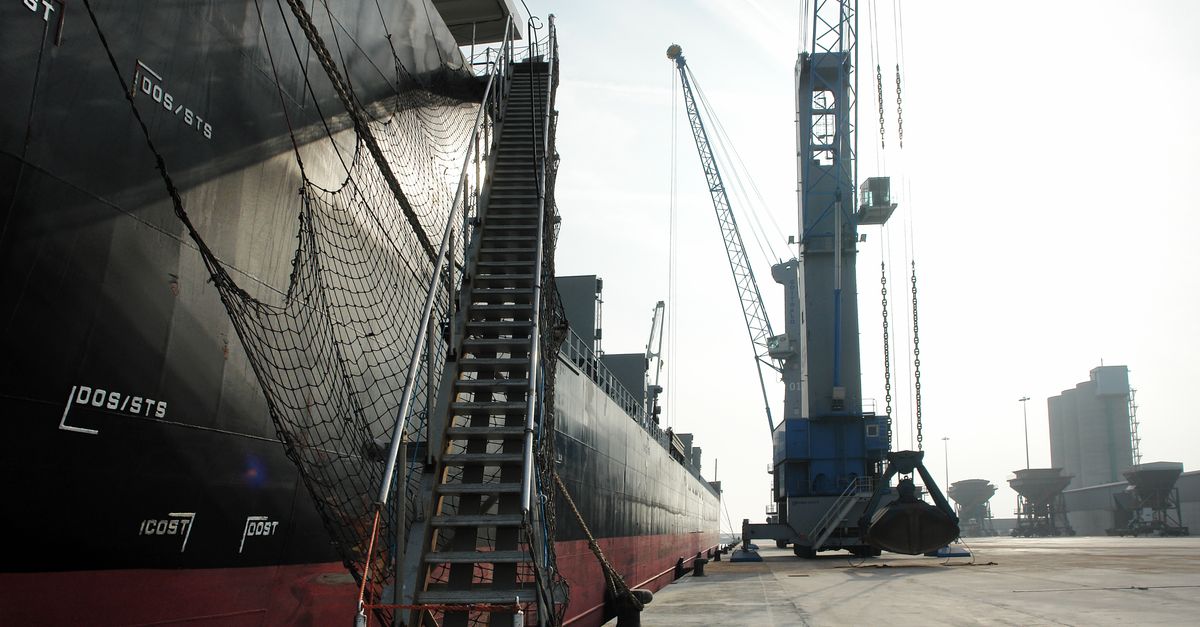
A growing push to reduce emissions in freight transportation is reshaping fuel infrastructure across the United States. New investments aim to offer fleets a cost-effective and cleaner alternative to diesel. The expansion reflects rising demand for practical solutions that balance sustainability with economic efficiency.Clean Energy Fuels Corp. revealed a major boost to its renewable natural gas (RNG) fueling network, introducing six newly active stations located along critical freight routes across the United States, with the announcement made at the Advanced Clean Transportation Expo to highlight the company’s ongoing commitment to advancing lower-emission transport options while recognizing the financial challenges that…
Read More
France: corporate CSR advancing decarbonization and social-impact procurement

France: Corporate CSR’s Role in Decarbonization & Social Procurement

France occupies a strategic position in Europe where corporate social responsibility (CSR) is evolving from a reputational add-on to a core business driver for climate action and inclusive procurement. Companies, financial institutions, and public buyers are aligning policies, investment, and purchasing decisions to reduce greenhouse gas emissions and generate measurable social value across supply chains. This article examines the regulatory and market context, corporate strategies for decarbonization, the rise of social-impact procurement, measurement and financing tools, practical cases, obstacles, and actionable best practices for firms operating in France.Regulatory and policy context shaping corporate behaviorNational and EU frameworks: France commits to…
Read More
Argentina: How investors price political risk and capital controls into returns

Argentina’s Agribusiness: CSR, Traceability, and Family Farm Support

Argentina’s agribusiness sector sits at the intersection of global food security, rural livelihoods, export earnings, and environmental stewardship. Large commercial producers and multinational traders coexist with a vast population of family farmers and smallholder cooperatives. Corporate social responsibility (CSR) programs that combine traceability with targeted support for family farmers have become central to meeting market demands for sustainability, reducing supply chain risk, and improving rural development outcomes.Why traceability and family-farmer support matterStrong traceability systems enable companies to verify the origin, legality, and environmental compliance of commodities like soy, corn, beef, peanuts, and fruit. Traceability supports three key CSR drivers:Market access…
Read More
Algeria: industrial CSR reducing emissions and strengthening responsible supplier networks

Algeria’s Industrial CSR Initiatives: Emissions & Supplier Responsibility

Algeria holds a unique role as a leading hydrocarbon producer and a nation whose industrial landscape continues to diversify. The energy and industrial fields — including oil and gas, petrochemicals, cement, steel, mining, and agri‑food manufacturing — remain fundamental to the country’s GDP and export income. These same industries also generate most of Algeria’s greenhouse gas emissions and environmental pressures, placing corporate social responsibility (CSR) at the heart of any realistic shift toward a low‑carbon future. This article explores how Algerian industries can curb emissions through CSR‑focused initiatives while cultivating responsible supplier networks that enhance environmental, social, and governance performance…
Read More
United Arab Emirates: CSR supporting social innovation and a responsible energy transition

United Arab Emirates CSR: Fostering Social Innovation & Energy Transition

The United Arab Emirates (UAE) has long stood as both a leading producer of hydrocarbons and a swiftly evolving, globally integrated economy, and this dual role heightens the importance of corporate social responsibility (CSR). Through CSR, organizations across public and private sectors can synchronize their missions with national goals, channel expertise and funding, and help drive a fair, low‑carbon energy transition. In the UAE, CSR now operates where climate commitments, workforce development, social innovation and private investment converge, increasingly serving as a central tool for advancing national sustainability and energy ambitions.Core policy benchmarks and clear performance goalsThe UAE’s policy framework…
Read More
Slovakia: automotive CSR boosting training and plant safety

Automotive CSR in Slovakia: Training & Safety Boost

Slovakia is one of Europe’s most concentrated car-producing nations, with a dense network of global manufacturers and suppliers. That industrial concentration gives corporate social responsibility (CSR) and workplace safety outsized importance: factory performance, community relations, and regulatory compliance are tightly linked to how companies train workers and manage plant risk. This article examines how CSR drives training and plant safety across Slovakia’s automotive sector, illustrates practical approaches, and highlights the business and social returns of investment.Why CSR, Training, and Safety Hold Significant Value in Slovakia’s Automotive IndustrySlovakia’s automotive presence influences jobs across the nation, drives export activity, and supports regional…
Read More
Cambodia: manufacturing CSR focused on worker well-being and literacy programs

Boosting Cambodian Manufacturing: CSR for Worker Health & Education

Cambodia’s manufacturing sector, largely centered on garments, footwear, and light assembly, has long powered the country’s export‑driven expansion and job creation. Employing hundreds of thousands of people—most of them women—it contributes a significant portion of national export revenue. In recent years, evolving global buyer standards, domestic labor reforms, and international oversight initiatives have encouraged many firms and brands to shift from basic regulatory compliance toward more forward‑looking CSR efforts that support worker well‑being and literacy. This article explores the reasoning, supporting evidence, program frameworks, obstacles, and actionable guidance for implementing effective CSR in Cambodian manufacturing, illustrating key points through examples…
Read More
Ecuador: CSR cases supporting the bioeconomy and conservation across diverse territories

Austrian Manufacturing: CSR, Circular Economy, & Worker-Centric Practices

Austria’s manufacturing sector has long blended engineering expertise with a strong sense of social responsibility, and in recent years its corporate social responsibility (CSR) strategies have evolved from standalone environmental or charitable initiatives into integrated frameworks that link circular economy practices to clear commitments to employee welfare. This has produced a distinctive model in which companies work toward greater material and energy efficiency, promote reuse and remanufacturing, and embrace product stewardship while also reinforcing workplace safety, investing in training, and fostering ongoing social dialogue.Policy and regulatory driversStrong European and national frameworks guide corporate efforts:European Green Deal and Circular Economy Action…
Read More
Brazil: CSR cases integrating reforestation and responsible supply chains

Corporate Social Responsibility Brazil: Reforestation & Supply Chains

Brazil's land-use profile links global supply chains with one of the planet's largest remaining tropical forest stocks. Agricultural expansion, timber production and commodity exports have driven deforestation for decades, while increasing corporate and civil-society pressure has produced a wave of corporate social responsibility (CSR) initiatives that explicitly pair reforestation with responsible sourcing. These initiatives seek to reduce forest loss, restore degraded landscapes and align procurement practices with climate, biodiversity and social goals.Context and driversLand-use pressures: Commodity production for beef, soy, pulp and paper, and sugar broadly drives clearing in Amazon and other Brazilian biomes. Periodic surges in measured forest loss…
Read More
Philippines: CSR strengthening disaster preparedness and neighborhood resilience

Philippines: How CSR Strengthens Disaster Readiness & Local Resilience

The Philippines contends with a rising array of natural threats, including tropical cyclones, storm surges, flooding, landslides, earthquakes, volcanic activity, and sea level increases. Each year, an average of 20 tropical cyclones enter the Philippine Area of Responsibility, with about five typically reaching land. Repeated large‑scale disasters—most notably Typhoon Haiyan (2013), which impacted millions and caused economic damage amounting to billions of dollars—have highlighted the urgent need for stronger disaster risk reduction (DRR) measures and more resilient communities. Companies operating in the Philippines are steadily weaving corporate social responsibility (CSR) into disaster preparedness and local resilience initiatives, shifting from occasional…
Read More