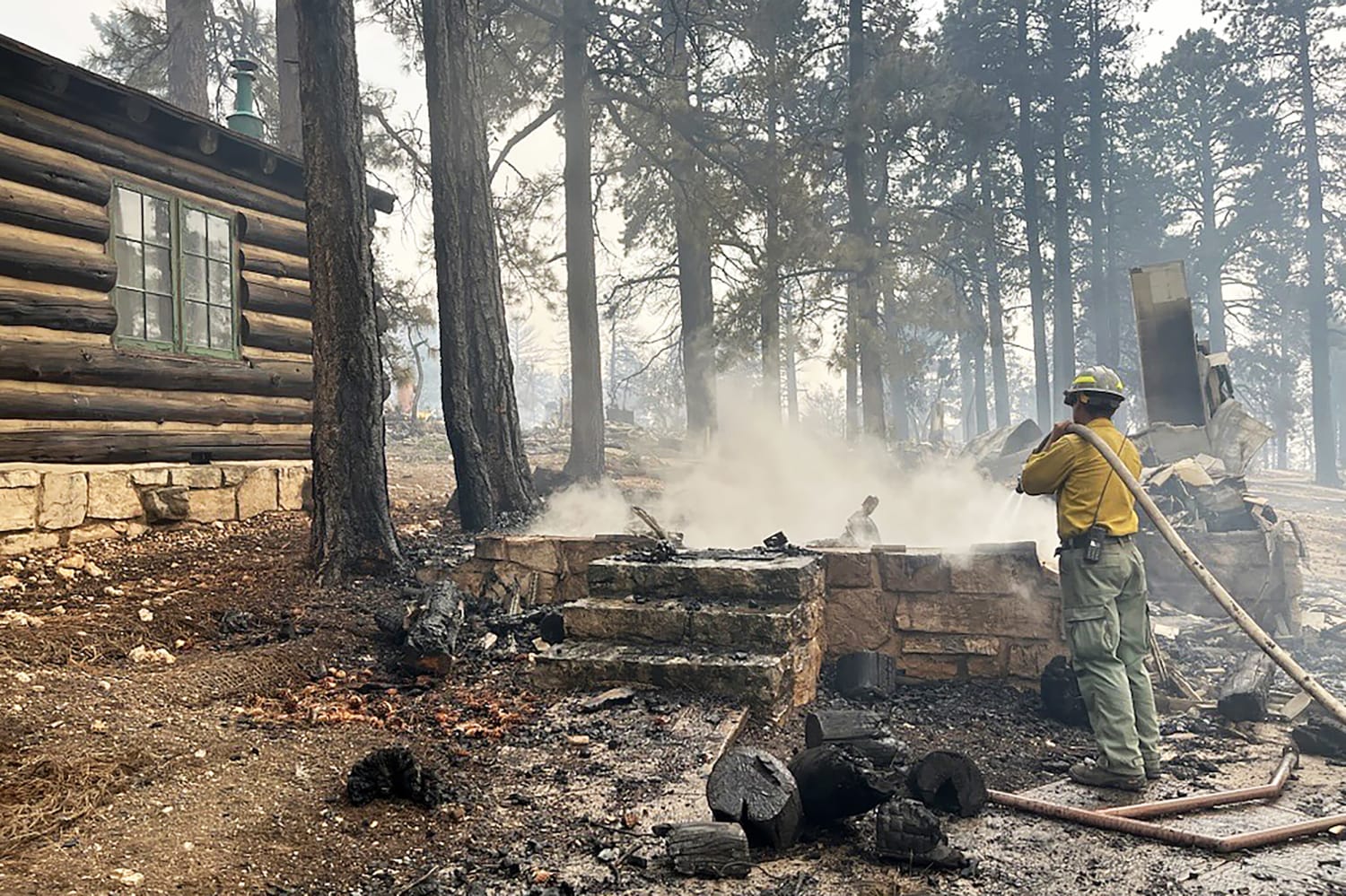

A cherished piece of American heritage has been reduced to ashes, as the iconic Grand Canyon Lodge on the North Rim of the Grand Canyon has been destroyed, leaving residents and visitors in a state of profound grief. The historic structure, which stood for nearly a century as a gateway to the natural splendor of one of the nation’s most awe-inspiring landmarks, was lost in a devastating fire, according to National Park Service officials.
The loss of the lodge has struck an emotional chord for many. Locals who grew up with the lodge as a familiar part of their landscape and travelers who made lifelong memories beneath its timbered roof have expressed deep sorrow over the sudden disappearance of what many considered not just a building, but a symbol of the Grand Canyon experience.
Originally constructed in the 1920s and rebuilt after a fire in the 1930s, the Grand Canyon Lodge was known for its rustic stone and log design, perched dramatically on the canyon’s North Rim. The structure offered unmatched views, warm hospitality, and a unique sense of place that attracted visitors from around the world. Its placement, architecture, and history earned it a spot on the National Register of Historic Places, and it played a vital role in the development of tourism at the Grand Canyon.
As reports of the devastation circulated, social media channels and community forums were inundated with messages of sympathy and introspection. To many, the lodge symbolized a multi-generational legacy. Families came back annually, typically during the same period each year, forming enduring bonds not only with the place but also with the employees and other visitors. For some, it was a singular journey—a sought-after destination once visited, now existing solely in memories.
El incendio, que según los informes comenzó en las primeras horas de la mañana, fue avivado por las condiciones secas y el terreno complicado, dificultando los esfuerzos de respuesta. Los equipos de bomberos trabajaron rápidamente para evitar que el fuego se propagara a áreas boscosas cercanas y cabañas históricas, pero no se pudo salvar el edificio principal del albergue. Actualmente se están llevando a cabo investigaciones para determinar la causa exacta del incendio, y las autoridades han prometido transparencia a medida que se disponga de más información.
The lodge was more than a structure—it served as an economic and cultural cornerstone for the region. It supported local jobs, bolstered the seasonal economy, and was a point of pride for surrounding communities. Its closure, even if temporary, raises concerns about the broader impact on tourism, small businesses, and regional identity. Many in the area worry about what the loss means for the future of North Rim operations, which already face challenges due to accessibility and limited seasonal availability.
Besides financial impacts, the cultural damage is considerable. The Grand Canyon Lodge was a unique instance of the rustic architecture style promoted by the National Park Service, with much of its original design maintained. The hand-crafted timbers, local stone materials, and lodgepole pine construction reflected a design approach meant to blend with the surrounding landscape—a foundational concept in the initial development of parks throughout the United States.
Visitors frequently referred to the lodge not only as accommodation but as a venue for connection—with nature, with history, and with each other. Its expansive windows captured views of the canyon throughout the year, showcasing breathtaking sunsets, serene morning fog, and the dynamic interplay of light on the cliffs. The fireplace offered coziness on chilly desert evenings, and the dining hall became the backdrop for numerous festivities, reunions, and contemplative times.
Park rangers and lodge staff, several of whom come back each year with a strong fondness for their work environment, have been significantly impacted. For these individuals, the lodge was beyond mere employment—it represented a vocation, an opportunity to convey their enthusiasm for the canyon and its heritage to travelers from across the globe. Their loss extends beyond a professional level and touches them deeply on a personal level.
While rebuilding efforts have not yet been formally announced, many are hopeful that restoration will be prioritized. There is precedent for such endeavors; the lodge itself was rebuilt once before following the original 1928 fire. Advocates argue that a careful and historically sensitive reconstruction could restore the spirit of the original while adapting to modern standards of safety and sustainability.
In the meantime, conservationists, historians, and community leaders are beginning to explore ways to honor the lodge’s legacy. Discussions include creating a virtual archive of photos and stories contributed by past guests, commemorative exhibits at nearby visitor centers, and oral history projects to document the significance of the lodge to generations of park-goers.
The loss of the Grand Canyon Lodge is a poignant reminder of the fragility of cultural landmarks, especially those situated within vulnerable natural environments. As climate patterns shift and wildfires become more frequent and intense, the need for increased investment in preservation, prevention, and emergency preparedness becomes all the more urgent.
However, within the destruction, there is a collective resolve not to allow the lodge’s narrative to conclude at this point. The communities surrounding the Grand Canyon, along with distant supporters, are coming together to back initiatives that assist park employees, restore what has been destroyed, and guarantee that future visitors can once more experience awe, relaxation, and contemplation on the canyon’s North Rim.
For now, the landscape remains—vast, silent, and eternal. But something deeply human has been lost with the Grand Canyon Lodge. And as the sun sets across the red rocks and wind rustles through the pines, a space remains—empty for now, but not forgotten.


