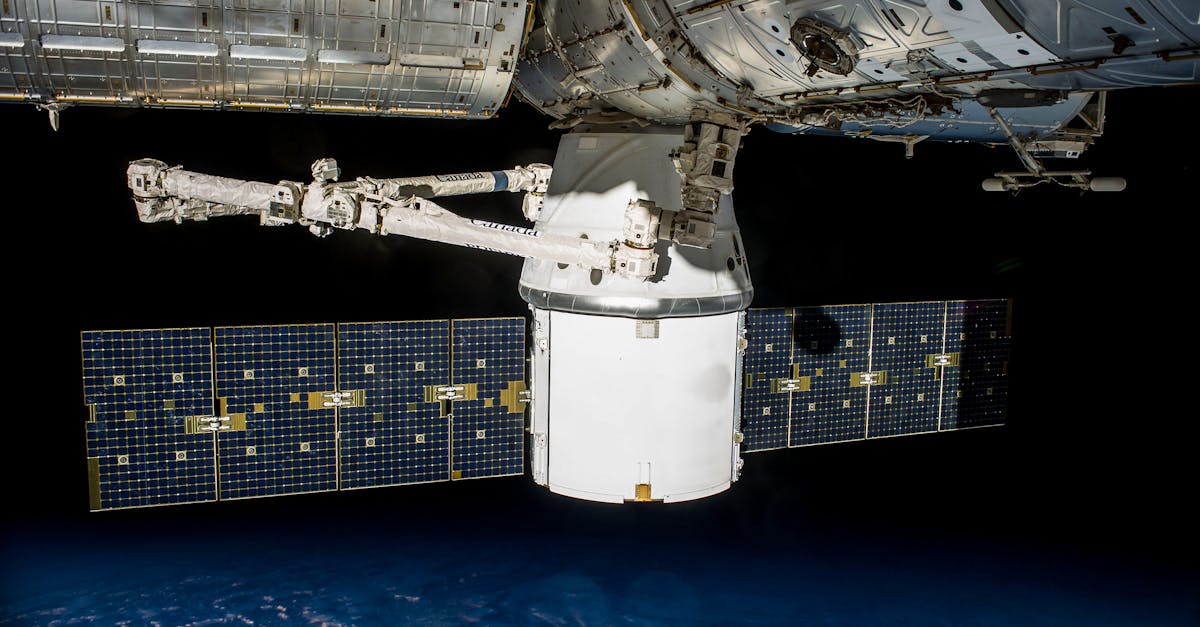

In-orbit servicing refers to the ability to inspect, repair, refuel, upgrade, or reposition spacecraft after launch. Once considered experimental, it is now emerging as a strategic capability with economic, security, and sustainability implications. As space becomes more congested and contested, the ability to maintain and adapt assets already in orbit is reshaping how governments and companies plan long-term space operations.
The Economic Rationale: Maximizing the Longevity of High-Value Assets
Modern satellites, particularly those in geostationary orbit, often cost several hundred million dollars to design, launch, and insure. Their operational lifetimes are frequently limited not by payload failure, but by depleted propellant or minor subsystem degradation.
In-orbit servicing changes this equation. A single refueling or life-extension mission can add five to ten years of operational life to a satellite, delaying replacement and preserving revenue streams. Northrop Grumman’s Mission Extension Vehicle program demonstrated this logic by docking with aging commercial satellites and taking over propulsion and attitude control, allowing operators to continue service without interruption.
From a strategic perspective, this capability reduces capital risk and increases resilience. Satellite owners can plan constellations more flexibly, knowing that on-orbit intervention is possible if conditions change or anomalies occur.
National Security and Strategic Resilience
Space systems have become essential to national defense, enabling navigation, missile detection, communications, and intelligence, yet growing dependence increases exposure to risk as satellites confront hazards from orbital debris and electronic disruption to possible hostile acts.
In-orbit servicing provides strategic depth. Inspection spacecraft can diagnose anomalies, repair damage, or reposition assets away from hazards. Refueling enables satellites to maneuver defensively or maintain coverage during crises. For military planners, this means fewer single points of failure and greater operational continuity.
The strategic significance becomes evident through government-backed initiatives, as programs supported by the United States Space Force and defense research agencies advance robotic servicing, autonomous rendezvous, and in-orbit assembly. These emerging capabilities extend beyond routine upkeep, serving also as a form of deterrence by conveying that space assets are no longer vulnerable or easily expendable.
Sustainability and Orbital Debris Management
Orbital debris stands among the most urgent long-term issues in space, as inactive satellites and scattered fragments heighten the likelihood of collisions, endangering ongoing missions and whole orbital zones, while in-orbit servicing helps mitigate this problem by supporting controlled end-of-life procedures.
Servicing vehicles can deorbit non-functional satellites, relocate them to disposal orbits, or stabilize tumbling objects. Companies such as Astroscale have conducted missions to demonstrate debris capture and removal techniques. By making cleanup technically and economically feasible, in-orbit servicing supports sustainable use of Earth orbit.
This sustainability aspect is strategic because access to key orbits underpins global communications, weather forecasting, and economic activity. Nations that help preserve the orbital environment help protect their own long-term interests.
Enabling Faster Technological Evolution
Traditional satellites are locked into their original design for their entire operational life. This rigidity contrasts sharply with the rapid pace of technological innovation on the ground. In-orbit servicing enables a modular approach, where components such as sensors, processors, or communication modules can be upgraded after launch.
This feature enables operators to quickly address new requirements, regulatory shifts, or market pressures rather than waiting years for a new satellite. For governments, it offers the flexibility to realign space infrastructure with changing security or research priorities. For commercial operators, it helps maintain an edge in rapidly evolving sectors like broadband and Earth observation.
Strategic Independence and Leadership in Industry
Mastering in-orbit servicing calls for sophisticated robotics, autonomous navigation, artificial intelligence, and high-precision propulsion, and these technologies in turn deliver broad spillover advantages to the wider space and robotics sectors.
Nations at the forefront in this field secure greater strategic independence, limiting their reliance on external launch timelines or substitute systems, while also establishing norms and standards for on-orbit conduct, docking mechanisms, and servicing procedures, a norm-shaping influence that can affect how space will be managed and utilized in the years ahead.
Private sector innovation plays a central role. Startups and established aerospace firms are developing servicing spacecraft, standardized interfaces, and business models based on subscription-style maintenance in space. Public-private partnerships have become a key mechanism for accelerating capability while sharing risk.
Obstacles and Key Strategic Considerations
Although it holds significant potential, in‑orbit servicing still encounters obstacles. The technical demands remain considerable, particularly when autonomous docking must be performed with non‑cooperative objects. Legal and regulatory structures are also in flux, with questions of liability, ownership, and authorization for servicing operations yet to be fully resolved.
Servicing activities can involve technologies that closely mirror those designed for interference or shutdown, which may lead to misread intentions and heighten tensions. As a result, maintaining openness, establishing trust-building practices, and defining clear operational standards becomes vital.
These obstacles do not reduce the strategic importance of in-orbit servicing; instead, they highlight how crucial it is to ensure responsible development and strong leadership.
A Capability Poised to Transform the Realm of Space Power
In-orbit servicing represents a shift from a disposable to a maintainable space architecture. It enhances economic efficiency, strengthens national security, supports environmental sustainability, and accelerates technological adaptation. As space systems become ever more central to life on Earth, the ability to care for, adapt, and protect those systems in orbit becomes a measure of strategic maturity. The nations and companies that invest early are not just extending satellite lifespans; they are redefining what it means to hold and exercise power in space.